This design technique makes your product more sustainable.
Sustainability is an important topic. Niels previously wrote about his view on sustainable design and how we deal with it during the development of our products. He argues to design products in such a way that they have a long life cycle, instead of frantically making products out of biodegradable material, which deteriorates its function. But there are other techniques that we, as designers, can use to make the products of the future more sustainable and therefore better for the world.


One of the techniques to extend the life cycle of a product is the Design For (Dis)Assembly design method. Which means that you build up your product of several parts that can be attached by using non-permanent techniques. The product can therefore be assembled and disassembled. The advantage of this technique is that if one of the parts is damaged, the user only has to replace or repair this part and there is no need to replace the product in its entirety.
By avoiding permanent attachments such as gluing, welding and soldering, the manufacturer has more control over the quality of the product and also creates little or no emissions during the production process. But pop rivets or staples, for example, are also not a long-term solution. Filling screw channels or purging cracks is also not in line with Design For (Dis)Assembly, in our opinion. These are often quick and easy solutions to make a product waterproof or make the design more aesthetically pleasing, but in the long run it decreases the product life cycle. To solve these kinds of challenges, we turn to alternatives such as cover (rubber) profiles or casting caps. This provides an extra part in your bill of materials, but will pay for itself in assembly time, quality of your product and repairability.

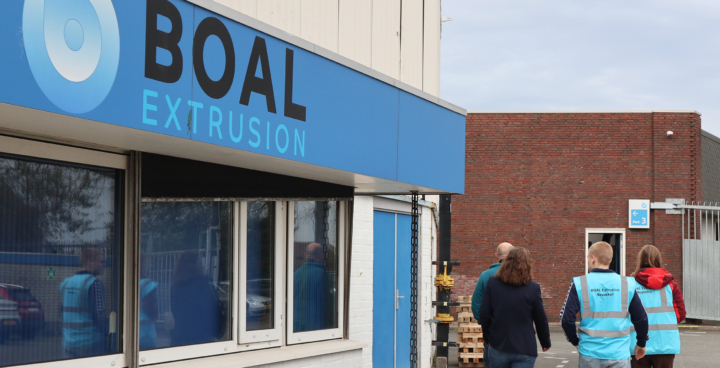
Fabrique Invent & Boal Extrusion
What do you get when you combine technical precision, sustainable ambition, and creative innovation? A collaboration that has endured effortlessly for over 30 years and continues to surprise today.

The 3D printing revolution.
A deepdive into design agencies and their digital workshops.


A glimpse into the professional field.
As an alumni, Els was a guest at Saxion University of Applied Sciences to talk about our agency.