Modular design in practice.
A widely used technique for designing a product or product line is modular design. We previously discussed what modular design entails. This technique is often attractive for both the customer and the manufacturer for more complex products. In this blog post, Senior Engineer Mike explains how we put modular design into practice!

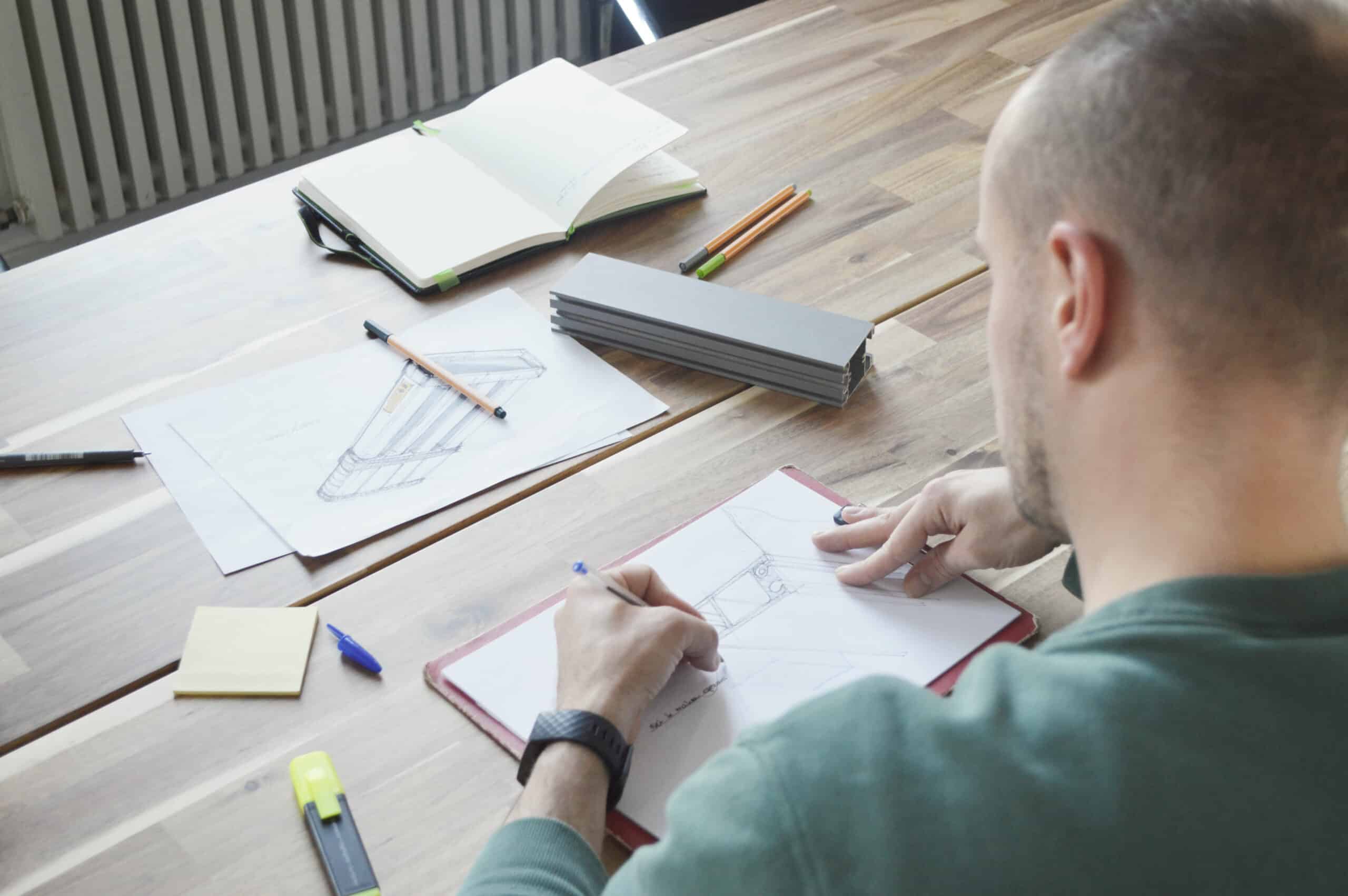
A commonly used technique for designing a product or product line is modular design. This technique is often attractive for both the customer and the manufacturer when designing more complex products. In this blog post, Senior Engineer Mike explains how we put modular design into practice!
The benefits
The advantage of breaking down into modules is that it simplifies the production of a complex system. A product is divided into subassemblies with limited interaction. This allows multiple people to work on different subassemblies simultaneously, for example. Besides shortening design time, it also has the major advantage that a defective product doesn’t immediately have to be scrapped. By building your design modularly, only the defective part of the product needs to be replaced. This defective module could potentially be repaired and returned to production.
This makes it attractive for both the manufacturer and the dealer and/or consumer. This results in shorter design times, lower costs, flexibility in modules, and limited inventory because not every component has the same lifespan.

We always consider the lifespan of our products. For example, by incorporating a special flap in the cassette profile of the above-mentioned awning, the fabric roller can be easily replaced without having to disassemble the entire frame. An example of a modular design.
Modular design in a product line
Building a product line can also be approached modularly. For example, by ensuring that the products foster customer loyalty. When products from one brand can be neatly and easily linked together, your customer will be more likely to buy product B after purchasing product A. If possible, it would be even better if you could reuse the modules in other products. This reduces the diversity of components, which in turn would make the logistics department happy.

An example of linkable designs are the products we developed for Lewens. Glass roofs can be connected to glass panels to form a cube, and various types of sunshades can then be attached above or below the canopy. Products are effortlessly connected without compromising aesthetics.
Flexibility vs. functionality
Of course, every method has its drawbacks, and modular design is no exception. The danger of this technique lies in creating a jack-of-all-trades approach. The goal is to be as flexible as possible and make the module applicable in multiple situations. This can not only slow down the design process but also make components unnecessarily heavy or complex. Therefore, careful consideration is always essential. Designing is about finding the balance between a product’s flexibility and ensuring it doesn’t become too complex and expensive for its intended use.
At Fabrique Invent, we are highly focused on modular design. We have a large number of returning customers who often want follow-up products after their first product. These products often need to be connectable or require reuse of components. In other words, creating “Lego bricks.”
We also strive to design the modules so that all subassemblies can be assembled in the factory. This minimizes on-site assembly time and manpower requirements. It also reduces the complexity of field work, as the difficult tasks are already performed in the factory by people with product knowledge. This ensures that dealers and consumers who purchase products from our customers incur minimal installation costs for our products.
Mike is a Senior Industrial Engineer at Fabrique Invent.
Fabrique Invent & Boal Extrusion
What do you get when you combine technical precision, sustainable ambition, and creative innovation? A collaboration that has endured effortlessly for over 30 years and continues to surprise today.

The 3D printing revolution.
A deepdive into design agencies and their digital workshops.


A glimpse into the professional field.
As an alumni, Els was a guest at Saxion University of Applied Sciences to talk about our agency.