The aluminum casting process
The aluminum casting process is a widely used manufacturing method in industry, where molten aluminum is poured into a mold to produce complex and precise components. Designers involved in this process must keep several crucial considerations in mind to ensure high-quality and cost-effective products.


An important factor for designers is the complexity of the desired product. Intricate designs with fine details can present challenges during casting and may require more advanced molds and techniques. It is essential that designers understand the limits of the casting process and consider the feasibility of production.
In addition, the thickness of the walls of the cast part must be considered. Walls that are too thin can result in uneven solidification and possible defects in the final product. Designers must carefully determine wall thickness based on functional requirements and material properties.


The choice of aluminum alloy is another critical factor. Various alloys offer various properties, such as strength, corrosion resistance, and thermal conductivity. Designers must evaluate the desired material properties and select a suitable alloy that meets the performance criteria.
The process begins with melting aluminum in a furnace, after which the liquid metal is poured into a mold that represents the desired shape of the final product. This mold can be made of various materials, such as steel or sand, depending on the design specifications.
The aluminum casting process involves two main methods: high pressure casting and low pressure casting. In high pressure casting, the molten aluminum alloy is injected into the mold under high pressure, resulting in rapid filling and rapid solidification of the metal. This method is particularly suitable for complex geometries and thin wall thicknesses. On the other hand, the low pressure casting process uses a slower but more controlled solidification by allowing the aluminum to rise into the mold from below under low pressure. This offers advantages in reducing internal stresses and obtaining better mechanical properties in the cast part. Designers must carefully choose between these methods based on the specific requirements of the project, taking into account the complexity of the design and the intended material properties.


In addition to technical considerations, cost and sustainability play an important role. Designers should strive for efficiency in the production process and consider how the design contributes to reducing material waste.
In short, the aluminum casting process offers designers the opportunity to produce complex and high-quality products. By paying attention to factors such as design complexity, wall thickness, alloy selection, and cost control, designers can create successful and efficient aluminum castings that meet both technical and economic requirements.
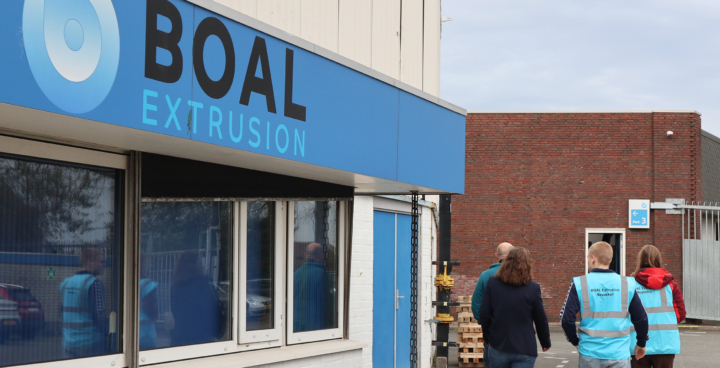
Fabrique Invent & Boal Extrusion
What do you get when you combine technical precision, sustainable ambition, and creative innovation? A collaboration that has endured effortlessly for over 30 years and continues to surprise today.


The 3D printing revolution.
A deepdive into design agencies and their digital workshops.

A glimpse into the professional field.
As an alumni, Els was a guest at Saxion University of Applied Sciences to talk about our agency.